Living guide
☀️Best Weather in the UK
The UK is not famous for its weather, but the reputation is a little unfair. Sunshine totals between the sunniest and dullest parts of the country differ by nearly a third, and annual rainfall can vary by a factor of four between the driest corners of East Anglia and the wettest slopes of the western hills. Choosing the right region does not buy you Mediterranean summers, but it genuinely does change how often you can sit outside with a coffee in March or hang washing out in July.
It also quietly shapes household economics. Drier regions see less damp damage to houses, cheaper insurance in some cases, and noticeably lower heating bills from milder winters near the south coast. Sunnier regions work better for solar panels, outdoor hobbies, and gardens that actually ripen fruit. None of this is dramatic, but cumulatively it makes a real difference to how somewhere feels year-round.
How we measure weather

Our weather rankings come straight from the Met Office 30-year climate averages, which are the gold standard for this kind of comparison because they smooth out freak years. We use two core figures: annual sunshine hours (the Campbell-Stokes-equivalent measurement of bright sunshine) and annual rainfall in millimetres. Together these produce a 0 to 100 Weather score, with higher scores meaning sunnier and drier.
There are limits worth flagging. Temperature is not part of the score because most of the UK sits in a narrow temperature band and preferences split roughly evenly between people who like warmer and cooler summers. Wind exposure matters enormously on the coast but is not yet included in the headline score: each area page surfaces it separately for coastal shortlists.
Where the sun actually shines

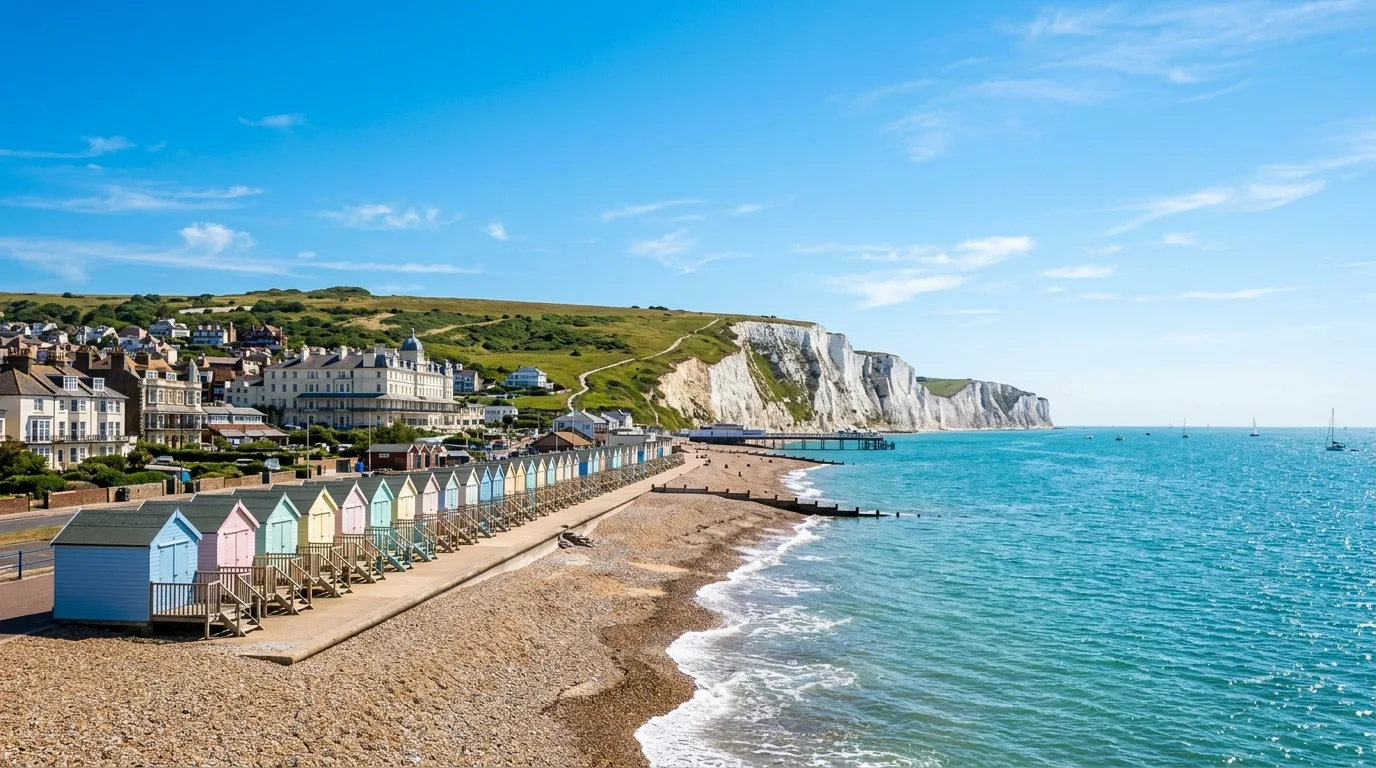
The sunniest places in the UK cluster along the south and south-east coasts, particularly the Isle of Wight, the Sussex coast, Bournemouth, and the Thanet peninsula. East Anglia is the driest region overall, with Essex and Cambridgeshire recording the lowest annual rainfall of anywhere in the country. Parts of Cornwall combine both: generous sunshine with relatively modest rainfall for a western county.
The rainiest areas, unsurprisingly, are the western hills: the Lake District, Snowdonia, the western Highlands, and parts of south-west Wales. Some of these places are spectacularly beautiful, and plenty of people happily accept 1,800mm of rain a year as the price of mountain walking on the doorstep. That is a reasonable trade, but you should make it consciously rather than by accident.
What to look for
Check sunshine and rainfall figures separately, not just the combined score. Drier is not always sunnier: East Anglia tops the rainfall table but trails the Sussex coast on sunshine. If you care about solar panels or garden productivity, weight sunshine higher; if you want outdoor exercise without kit, weight rainfall lower. And if you are moving from a wetter region, visit in winter rather than August to see what the less glamorous months actually feel like.
How we rank: Ranked by our Weather dimension score (0–100), based on average annual sunshine hours and rainfall from Met Office 30-year climate data.
📊
20
Areas Ranked
🏠
£314k
Avg House Price
☀️
70/100
Avg Weather Score
📍
South West
Top Region
Where they are.
Loading map...
Region Distribution
Where the top 20 areas are located
Top 20 Best Weather


Related guides.

Best Coastal Towns to Live in the UK
Living by the sea comes with a particular quality of life that is hard to replicate inland. The air is genuinely clea...
View guide
Best Places to Retire in the UK
Retirement is a chance to redesign your life around what actually matters: peace, health, community, and enjoyment. W...
View guide
Greenest Places to Live in the UK
Living near green space is not just pleasant, it is measurably good for you. Research consistently links access to pa...
View guide